

Are electromagnetic fields silently sabotaging your high-tech workspace productivity? As technology advances, the concern about EMF interference is growing. With more devices connected and in use, the potential for electromagnetic fields to disrupt operations is becoming a significant issue.
Studies have shown that electromagnetic fields can interfere with electronic devices, causing malfunctions and data loss. This is particularly concerning in high-tech workspaces where precision and reliability are crucial.
In this article, we will explore the causes of EMF interference and provide practical solutions to mitigate its effects. By understanding the sources of electromagnetic fields and implementing strategies to reduce their impact, you can protect your workspace and maintain productivity.
Key Takeaways
- Understanding the sources of electromagnetic fields
- Identifying devices that are most susceptible to EMF interference
- Strategies for reducing EMF interference
- Practical solutions for high-tech workspaces
- Best practices for maintaining productivity
Understanding Electromagnetic Fields in Modern Offices
Electromagnetic fields are an invisible aspect of contemporary office environments, affecting both technology and human health. In modern workspaces, EMF is emitted by various devices, including computers, Wi-Fi routers, and smartphones, creating a complex electromagnetic environment.
What EMF Really Means for Your Workspace
EMF exposure in the workplace can have significant implications for both equipment performance and employee well-being. Understanding the sources and effects of EMF is crucial for designing offices that minimize exposure while maintaining the benefits of modern technology.
The main sources of EMF in modern offices include:
- Computers and Servers: These devices emit significant levels of EMF, particularly if not properly shielded or grounded.
- Wireless Networks: Wi-Fi routers and access points are constant sources of EMF, contributing to the overall electromagnetic noise in the office.
- Office Electronics: Printers, copiers, and other peripheral devices also emit EMF, adding to the cumulative exposure.
The Invisible Challenge of Contemporary Office Design
Designing offices that minimize EMF exposure poses a significant challenge. It requires a balance between leveraging technology for productivity and reducing the potential negative impacts of EMF. Effective office design must consider the placement of EMF-emitting devices, the use of shielding materials, and the creation of low-EMF areas for employees.
Some strategies for reducing EMF in office design include:
- Zoning: Segregating high-EMF devices from work areas.
- Distance: Maximizing the distance between EMF sources and employees.
- Shielding: Using materials and technologies that block or reduce EMF.
By understanding EMF and its implications, businesses can create work environments that are both technologically advanced and safe for their employees.
The Most Common Culprits: EMF Sources in Tech Environments
The modern tech workspace is a hotbed of EMF-producing technology. As we increasingly rely on high-tech devices and infrastructure, understanding the sources of electromagnetic fields becomes crucial for creating a healthier work environment.
Wireless Networks and Communication Devices
Wireless networks, including Wi-Fi routers and access points, are significant contributors to EMF in tech environments. Cell phones, VoIP phones, and other wireless communication devices also emit considerable amounts of electromagnetic radiation. To mitigate this, consider strategies like scheduling Wi-Fi downtime or using wired connections when possible.
Computer Equipment and Server Rooms
Computers, especially those with high processing power, generate substantial EMF. Server rooms, with their concentration of servers and networking equipment, are particularly dense with electromagnetic fields. Proper shielding and distancing these areas from regular workspaces can help minimize exposure.
Office Electronics and Peripheral Devices
Other office electronics, such as printers, scanners, and photocopiers, also contribute to the overall EMF levels. Even peripheral devices like keyboards and mice can emit low levels of electromagnetic fields, although their impact is generally less significant. Optimizing the placement of these devices and using low-EMF alternatives when available can be beneficial.
By understanding and addressing these common sources of EMF, organizations can take the first steps towards optimizing their office layout to reduce electromagnetic radiation effects. This not only contributes to a healthier work environment but can also improve equipment performance and overall workplace well-being.
Why EMF Interference Deserves Your Attention
With the rise of high-tech workspaces, the concern over EMF interference has become more pressing than ever. As technology advances and our reliance on it grows, understanding the implications of electromagnetic fields (EMF) on our work environments is crucial.
EMF interference can have far-reaching consequences on various aspects of our workspaces. It’s not just about the technology we use, but also about creating a healthy and productive work environment.
Equipment Performance and Reliability Issues
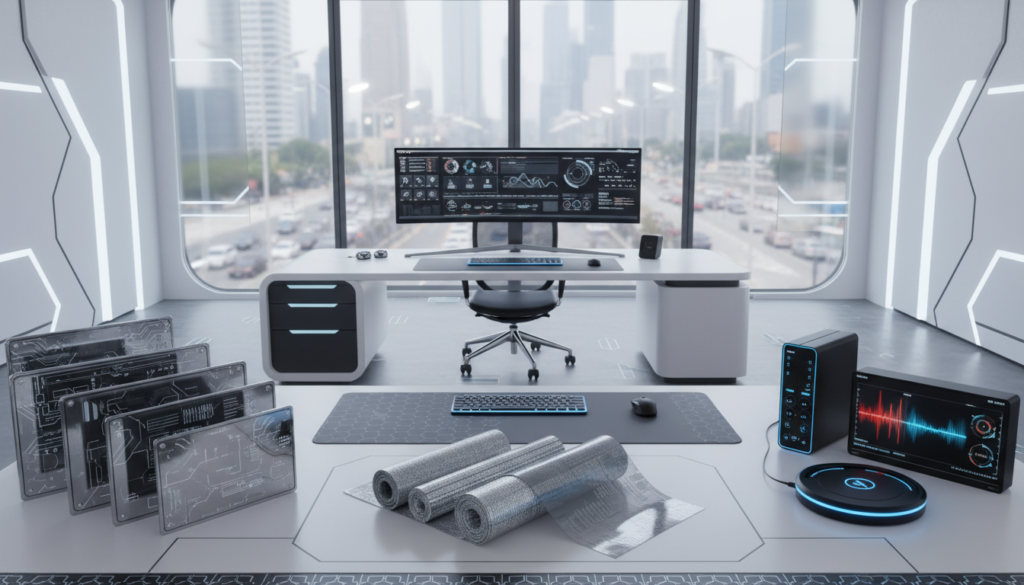
One of the primary concerns with EMF interference is its impact on equipment performance and reliability. Electromagnetic fields can cause disruptions to sensitive electronic equipment, leading to malfunctions, data loss, and decreased productivity.
- Disruption of critical communication systems
- Malfunctioning of sensitive medical equipment
- Data loss and corruption due to interference
Implementing EMF shielding solutions can significantly mitigate these issues. By protecting equipment from electromagnetic interference, businesses can ensure smoother operations and reduce the risk of costly downtime.
Employee Health and Wellness Considerations
Beyond equipment, EMF interference also raises concerns about employee health and wellness. Prolonged exposure to electromagnetic fields has been a topic of research regarding its potential health impacts.
“The widespread presence of EMF in our daily lives, including in workplaces, necessitates a cautious approach to minimize exposure and mitigate potential health risks.”
Creating a workspace that prioritizes workstation EMF protection can help alleviate these concerns. Simple measures, such as rearranging workstations or using EMF shielding materials, can contribute to a healthier work environment.
Data Integrity and Communication Quality
Finally, EMF interference can compromise data integrity and communication quality. In high-tech workspaces where data transfer and communication are critical, any disruption can have significant consequences.
| Impact | Consequence | Solution |
|---|---|---|
| Data Corruption | Loss of critical information | Implement data backup protocols |
| Communication Disruption | Delays in project execution | Use shielded communication cables |
| Equipment Malfunction | Downtime and repair costs | Apply EMF shielding solutions |
By understanding the sources of EMF interference and taking proactive steps to mitigate its effects, businesses can protect their data, ensure reliable communication, and maintain a productive work environment.
Measuring EMF Levels: Getting the Real Picture
To get a clear picture of the EMF exposure in your workspace, accurate measurement is key. Understanding the levels of electromagnetic fields in your high-tech workspace is crucial for maintaining a healthy environment and ensuring the well-being of employees.
There are various tools and methods available for measuring EMF levels, ranging from professional auditing services to DIY assessment tools. The choice between these options depends on the complexity of your workspace and the level of detail you require.
Professional EMF Auditing Services Worth Considering
Professional EMF auditing services offer a comprehensive and detailed assessment of EMF levels in your workspace. These services are typically conducted by experts who use specialized equipment to measure EMF exposure across different areas of your office.
Some benefits of using professional EMF auditing services include:
- Accurate and reliable measurements
- Expert analysis and recommendations
- Identification of potential EMF sources
A professional audit can provide a detailed report on EMF levels, helping you make informed decisions about reducing exposure. Companies like EMF Experts and SafeSpace offer such services, utilizing state-of-the-art equipment to assess EMF exposure.
Practical DIY Assessment Tools and Methods
For those who prefer a more hands-on approach or have smaller workspaces, DIY EMF assessment tools are available. These tools range from simple EMF meters to more sophisticated devices that can detect a wide range of frequencies.
Some popular DIY EMF assessment tools include:
| Tool | Description | Frequency Range |
|---|---|---|
| Cornet ED72 | A reliable and easy-to-use EMF meter | 1 Hz to 8 GHz |
| Trifield TF2 | Measures RF, microwave, and RF/microwave radiation | 1 MHz to 8 GHz |
| GQ EMF-390 | A high-end EMF meter with a wide frequency range | 10 Hz to 10 GHz |
When using DIY assessment tools, it’s essential to follow the manufacturer’s instructions and take multiple measurements to ensure accuracy.
By understanding the EMF levels in your workspace, you can take the first step towards creating a healthier environment for your employees. Whether you choose a professional auditing service or a DIY assessment tool, measuring EMF levels is a critical step in managing workplace health hazards.
Smart Office Layout Design for EMF Reduction
A well-planned office layout can significantly reduce EMF exposure, enhancing both equipment performance and employee well-being. By strategically designing the workspace, you can minimize the impact of electromagnetic fields on your office environment.
The Zoning Approach to Workspace Planning
Implementing a zoning approach to workspace planning is an effective way to reduce EMF exposure. This involves dividing the office into areas based on the level of EMF emission. For instance, areas with high EMF emission, such as server rooms, can be isolated from daily work areas.
- Identify high-EMF areas: Server rooms, data centers, and areas with high concentrations of electronic devices.
- Create low-EMF zones: Designate areas for focused work or employee relaxation with minimal EMF exposure.
- Buffer zones: Establish transitional areas that help reduce EMF exposure between high and low-EMF zones.
Distance and Orientation Matter More Than You Think
The distance between EMF sources and workstations, as well as the orientation of devices, can significantly impact EMF exposure. Increasing the distance between high-EMF devices and work areas can help reduce exposure.
Key Considerations:
- Place high-EMF devices away from workstations.
- Orient devices to minimize direct exposure to work areas.
Strategic Workstation and Equipment Placement
Strategically placing workstations and equipment can further reduce EMF exposure. Consider the layout of your office and the placement of devices to minimize EMF interference.
| Placement Strategy | Benefit |
|---|---|
| Position workstations at least 3 feet away from high-EMF devices | Reduces direct EMF exposure |
| Use device orientation to minimize EMF emission towards work areas | Decreases overall EMF exposure |
| Implement a centralized location for high-EMF equipment like servers | Contains EMF emission to a specific area |
By incorporating these strategies into your office design, you can create a workspace that not only minimizes EMF exposure but also enhances productivity and employee satisfaction.
EMF Interference in High-Tech Workspace Layouts: My Recommended Solutions
Effective EMF management in high-tech environments starts with understanding the sources of interference and designing accordingly. By implementing thoughtful workspace layouts, organizations can significantly reduce the impact of EMF on both equipment and employees.
Floor Plans That Prioritize EMF Awareness
Designing floor plans with EMF awareness in mind involves several key considerations. First, it’s crucial to identify areas where high-EMF equipment is concentrated, such as server rooms or areas with multiple wireless devices. Strategic placement of these areas can help minimize exposure to other parts of the workspace.
- Identify high-EMF areas: Server rooms, wireless device clusters
- Use zoning to segregate high-EMF areas from common workspaces
- Consider the layout’s impact on EMF exposure pathways
Separating High-Output Equipment from Daily Work Areas
One of the most effective ways to reduce EMF exposure is by separating high-output equipment from areas where employees spend most of their time. This can involve relocating equipment to less frequented areas or using EMF shielding solutions to block or absorb EMF emissions.
- Assess the EMF output of various office equipment and devices
- Relocate high-output devices to areas with minimal occupancy
- Implement shielding where relocation isn’t feasible
Creating Effective Buffer Zones Without Sacrificing Space
Buffer zones can be an effective way to reduce EMF exposure without significantly impacting workspace. By creating physical barriers or using EMF-absorbing materials, organizations can minimize the spread of EMF interference.
- Utilize physical barriers to block EMF pathways
- Implement EMF-absorbing materials in strategic locations
- Optimize workspace layout to naturally reduce EMF exposure
By incorporating these strategies into workspace design, organizations can create a healthier, more productive environment for their employees while minimizing the risks associated with EMF interference in high-tech workspaces.
Shielding Technologies That Actually Work
Effective shielding technologies are crucial for minimizing electromagnetic field (EMF) exposure in modern workspaces. As we’ve discussed, EMF interference can have significant implications for both equipment performance and employee health. Shielding technologies offer a practical solution to mitigate these risks.
EMF-Blocking Paint and Architectural Materials
One of the innovative solutions for reducing EMF exposure is the use of EMF-blocking paint and architectural materials. These products are designed to absorb or reflect electromagnetic radiation, thereby reducing the EMF levels within a workspace.
Key benefits of EMF-blocking paint include:
- Easy application to walls and ceilings
- Effective against a wide range of EMF frequencies
- Aesthetic flexibility, allowing for various colors and finishes
Window Films and Fabric Solutions for Flexible Protection
Window films and fabric solutions provide another layer of protection against EMF radiation. These can be particularly useful for offices with large windows or where architectural changes are limited.
Window films can block up to 99% of EMF radiation, making them an effective barrier against external sources of EMF. Fabric solutions, such as curtains or drapes made from EMF-blocking materials, offer flexibility and can be easily integrated into existing decor.
When to Consider Faraday Cage Implementation
For more comprehensive EMF shielding, a Faraday cage can be an effective solution. A Faraday cage is an enclosure made of conductive materials that distributes electromagnetic charges evenly around its surface, cancelling out external EMF fields.
Consider implementing a Faraday cage in situations where:
- High levels of EMF exposure are detected
- Sensitive equipment requires enhanced protection
- A dedicated low-EMF workspace is needed
| Shielding Technology | Effectiveness | Application |
|---|---|---|
| EMF-Blocking Paint | High | Walls, Ceilings |
| Window Films | Very High | Windows |
| Faraday Cage | Extremely High | Enclosed Spaces |
By understanding and applying these shielding technologies, workspaces can significantly reduce EMF exposure, creating a healthier and more reliable environment for both employees and equipment.
Choosing and Configuring Low-EMF Office Equipment
As we continue to integrate technology into our workspaces, understanding the impact of electromagnetic fields (EMF) becomes increasingly important. The equipment we choose and how we configure it can significantly affect EMF exposure in the office.
Selecting Technology with EMF Output in Mind
When selecting office equipment, it’s crucial to consider the EMF output. Some devices are designed to be more EMF-friendly than others. For instance, opting for equipment with lower EMF emission rates or those that comply with stricter EMF standards can help minimize exposure.
Key Considerations:
- Look for devices with low EMF emission rates.
- Choose equipment that complies with international EMF standards.
- Consider the overall EMF profile of the device, not just its peak emission.
The Critical Role of Proper Grounding
Proper grounding of office equipment is essential for reducing EMF exposure. Incorrect or inadequate grounding can lead to increased EMF levels, potentially affecting both equipment performance and employee health.
Grounding Tips:
- Ensure all equipment is properly grounded according to the manufacturer’s instructions.
- Regularly inspect grounding connections for damage or wear.
- Use grounding experts for complex setups or when in doubt.
Cable Management Strategies That Reduce Interference
Effective cable management is not just about keeping the workspace tidy; it’s also a critical strategy for reducing EMF interference. By organizing cables and keeping them away from work areas, you can minimize exposure.
Cable Management Best Practices:
| Strategy | Description | Benefit |
|---|---|---|
| Cable Routing | Route cables away from work areas and through designated cable paths. | Reduces EMF exposure. |
| Cable Ties and Clamps | Use cable ties and clamps to keep cables organized and secured. | Minimizes cable clutter and reduces EMF interference. |
| Shielded Cables | Opt for shielded cables where possible to reduce EMF emission. | Lowers EMF exposure and improves signal integrity. |
By choosing the right equipment, ensuring proper grounding, and implementing effective cable management strategies, businesses can significantly reduce EMF exposure in the workplace, creating a healthier environment for employees.
Building an Effective EMF Management Strategy
An effective EMF management strategy is the backbone of a healthy and productive high-tech workspace. This involves a multi-faceted approach that includes educating employees, implementing monitoring protocols, and balancing innovation with protection.
Educating Your Team About EMF Awareness
Educating employees about EMF awareness is a critical first step. This includes understanding what electromagnetic fields are, how they’re generated, and their potential impact on health and equipment performance. Training programs can help employees identify potential EMF sources and take appropriate precautions.
By fostering an environment of awareness, organizations can empower their employees to contribute to a safer and more efficient workspace.

Establishing Monitoring and Maintenance Protocols
Regular monitoring and maintenance are essential for an effective EMF management strategy. This involves using EMF auditing services to assess the electromagnetic field levels in the workspace and identify areas for improvement.
Maintenance protocols should include regular checks on equipment and infrastructure to ensure they’re functioning within safe EMF limits. This proactive approach can help prevent issues before they become major problems.
Finding the Right Balance Between Innovation and Protection
One of the key challenges in managing EMF is finding the right balance between embracing innovation and protecting employees and equipment. This requires a nuanced understanding of the technologies in use and their EMF profiles.
By adopting a balanced approach, organizations can harness the benefits of technology while minimizing its risks. This might involve implementing shielding technologies or reconfiguring workspace layouts to reduce EMF exposure.
Conclusion
Creating a workspace that balances innovation with protection from EMF interference is crucial for both equipment performance and employee well-being. As discussed, a comprehensive approach is necessary to minimize EMF interference in high-tech workspaces.
By understanding the sources of EMF, such as wireless networks, computer equipment, and office electronics, you can design an office layout that reduces exposure. Implementing shielding technologies, like EMF-blocking paint and window films, can further reduce interference.
Effective EMF management strategies, including educating your team and establishing monitoring protocols, are also essential. By combining these approaches, you can create a workspace that supports both productivity and health.
Ultimately, minimizing EMF interference in high-tech workspace layouts requires a multifaceted strategy that incorporates design, technology, and management. By taking a proactive approach, you can ensure a safer, more efficient work environment.