
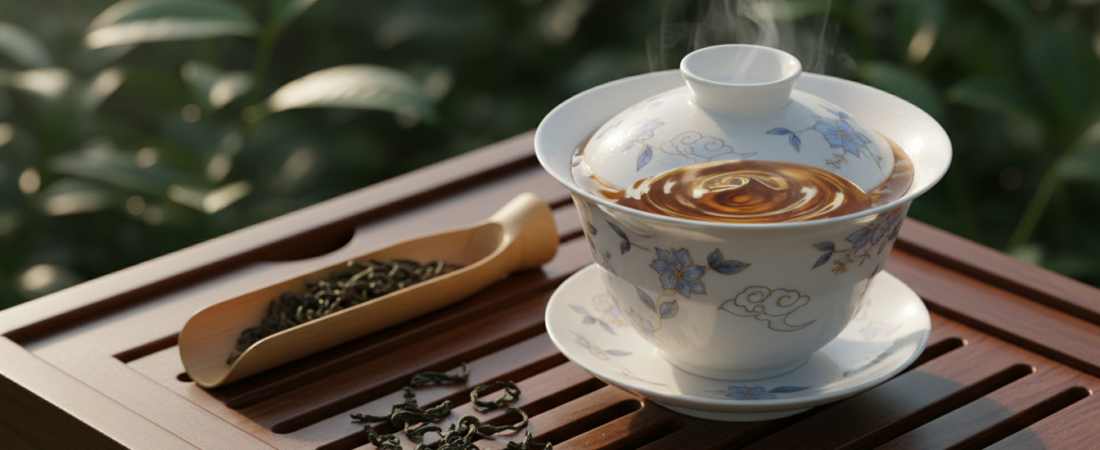
Can a simple teacup elevate your tea-drinking experience to new heights? For centuries, the gaiwan has been a cornerstone of Chinese tea culture, offering a unique and nuanced way to brew and appreciate tea.
The gaiwan, a traditional Chinese teacup, is more than just a vessel – it’s a gateway to the art of tea. By mastering the gaiwan, you’ll unlock the secrets to perfect tea, from the delicate balance of flavors to the subtle nuances of aroma.
As you embark on this journey, you’ll discover the rich history and cultural significance behind the gaiwan, and learn how to harness its potential to enhance your tea experience.
Key Takeaways
- Understand the history and cultural significance of the gaiwan
- Learn the basics of using a gaiwan for tea brewing
- Discover how to optimize your tea experience with a gaiwan
- Explore the nuances of tea flavors and aromas using a gaiwan
- Master the art of brewing perfect tea with a gaiwan
Why the Gaiwan Has Captured My Heart (and Palate)
For those who appreciate the art of tea-making, the gaiwan is a game-changer. Its unique design allows for a level of control and mindfulness that elevates the tea-drinking experience. Using a gaiwan enables you to brew tea with precision, bringing out the full potential of the leaves.
The gaiwan benefits are numerous, making it a favorite among tea enthusiasts. One of the primary advantages is its versatility. Whether you’re brewing delicate green tea or robust pu-erh, the gaiwan allows for multiple infusions, ensuring that you get the most out of your tea leaves.
- Precise control over brewing parameters such as temperature and steeping time
- The ability to perform multiple infusions, getting more from your tea leaves
- A sensory experience that enhances the appreciation of tea, from the aroma to the flavor
- Mindfulness: the process of brewing tea with a gaiwan encourages a meditative state, allowing you to connect with the tea on a deeper level
By incorporating a gaiwan into your tea routine, you’ll not only enhance your tea-drinking experience but also cultivate a greater appreciation for the art of tea-making. The gaiwan’s design and functionality work together to bring out the best in your tea, making every sip a delight.
The gaiwan is more than just a teapot; it’s a tool that transforms the way you experience tea.
The Ancient Elegance: Understanding the Gaiwan’s Origins
With roots in the Ming Dynasty, the Gaiwan has evolved into a sophisticated tea brewing vessel. Its history is deeply intertwined with the traditional Chinese tea ceremony, Gong Fu Cha, which emphasizes the art of tea preparation and the mindfulness of the moment.
From Ming Dynasty to Modern Tea Tables
The Gaiwan’s journey began in the Ming Dynasty (1368-1644), a period that saw a significant rise in tea culture. Initially used for brewing loose-leaf tea, the Gaiwan’s design was influenced by the need for a simple, effective way to steep tea leaves. Over time, it became an integral part of Gong Fu Cha, the traditional Chinese tea ceremony that values the nuances of tea brewing.
As tea culture evolved, so did the Gaiwan. It adapted to various regional tea preferences and brewing techniques, becoming a staple in Chinese tea households. Today, the Gaiwan is celebrated not only for its functionality but also for its elegance and the meditative quality it brings to the tea brewing process.
The Philosophy Behind the Three-Piece Design
The Gaiwan’s design is rooted in simplicity and harmony with nature, reflecting the philosophical underpinnings of traditional Chinese culture. The three-piece design consists of a bowl, a lid, and a saucer, each component serving a specific purpose in the tea brewing process.
“The simplicity of the Gaiwan belies its complexity in use. It requires a harmony between the tea leaves, the water, and the brewer’s intent.” –
| Component | Function |
|---|---|
| Bowl | Holds the tea leaves and water, allowing for the infusion process. |
| Lid | Controls the temperature and aroma of the tea by trapping or releasing heat. |
| Saucer | Catches the tea when pouring, preventing spills and warming the hands. |
The Gaiwan’s three-piece design is not just functional; it embodies the principles of balance and harmony that are central to Gong Fu Cha. By understanding the philosophy behind the Gaiwan, tea enthusiasts can deepen their appreciation for this ancient tea brewing vessel and the rich cultural heritage it represents.
What is a Gaiwan and How Do You Use One?
At its core, the Gaiwan is a versatile and elegant tea brewing vessel that consists of three main parts. Understanding these components is crucial to mastering the art of brewing tea with a Gaiwan.
Breaking Down the Three Essential Components
A Gaiwan is composed of three essential parts: the bowl, the lid, and the saucer. Each part plays a vital role in the tea brewing process.
The Bowl: Your Brewing Vessel
The bowl is where the tea leaves unfurl and release their flavors. It’s typically designed to allow for the optimal expansion of tea leaves, ensuring a rich and nuanced brew.
The Lid: More Than Just a Cover
The lid serves multiple purposes. It helps to control the temperature of the tea, allows for the release of excess steam, and can be used to strain the tea leaves when pouring.
The Saucer: Stability and Protection
The saucer provides a stable base for the Gaiwan, protecting your hands from the heat of the bowl and preventing accidental spills.
The Basic Function Explained Simply
Using a Gaiwan is a straightforward process once you understand its components. Here’s a simplified overview:
- Add tea leaves to the bowl.
- Pour hot water over the leaves.
- Steep for the appropriate amount of time.
- Use the lid to strain the tea as you pour it into your cup.
The Gaiwan’s design allows for a high degree of control over the brewing process, making it ideal for a variety of teas.
| Component | Function |
|---|---|
| Bowl | Brewing vessel for tea leaves |
| Lid | Controls temperature, releases steam, strains tea leaves |
| Saucer | Provides stability and protects hands from heat |
Choosing Your Perfect Gaiwan: Materials Matter
Gaiwans come in an array of materials, each with its own set of benefits and characteristics. The choice of material can significantly impact your tea brewing experience, from the flavor of the tea to the ease of cleaning the Gaiwan tea set.
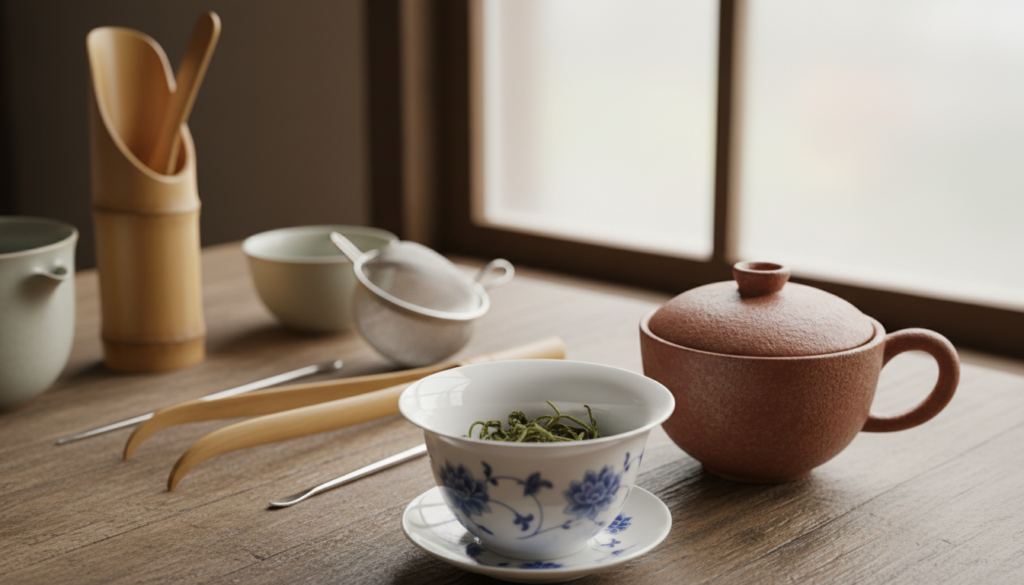
Porcelain Gaiwans: The Classic Choice
Porcelain Gaiwans are a timeless favorite among tea enthusiasts. They are known for their delicacy and elegance, making them a beautiful addition to any tea collection. Porcelain is also non-porous, which means it won’t absorb flavors or odors, ensuring a pure tea taste with every brew.
Glass Gaiwans for Visual Tea Lovers
Glass Gaiwans offer a unique visual experience, allowing you to observe the tea leaves as they unfurl. They are typically made from heat-resistant glass, making them safe for brewing a variety of teas. Glass Gaiwans are also easy to clean and maintain, adding to their appeal.
Ceramic and Clay Varieties
Ceramic and clay Gaiwans are prized for their earthy aesthetic and the unique flavors they can impart to the tea. These materials are often associated with traditional tea ceremonies and can add a layer of cultural authenticity to your tea brewing practice.
Size Considerations for Your Gaiwan Tea Set
When selecting a Gaiwan tea set, size is an important factor to consider. Larger Gaiwans can accommodate more tea leaves, allowing for a more generous brewing experience. However, smaller Gaiwans are more portable and versatile, making them ideal for travel or for those with limited storage space.
Ultimately, the perfect Gaiwan tea set is one that balances material, size, and personal preference. By considering these factors, you can find a Gaiwan that enhances your tea brewing experience and becomes a treasured part of your tea ritual.
Why I Believe the Gaiwan Outshines Other Brewing Methods
In my experience, the gaiwan has proven to be superior to other tea brewing methods, thanks to its ability to extract complex flavors and aromas. The gaiwan’s design allows for a level of precision that is hard to achieve with other brewing vessels.
Temperature Control and Flavor Extraction
One of the key advantages of the gaiwan is its ability to control temperature precisely. This is crucial because different teas require specific temperatures to bring out their optimal flavor profiles. The gaiwan’s design enables you to adjust the temperature of the water with ease, ensuring that your tea is brewed to perfection every time.
Flavor extraction is another area where the gaiwan excels. The combination of the gaiwan’s material and its three-piece design allows for a nuanced extraction of flavors from the tea leaves. This results in a more complex and satisfying cup of tea compared to other brewing methods.
“The gaiwan is an instrument that allows the tea to express itself fully, revealing nuances that other brewing methods might miss.”
| Brewing Method | Temperature Control | Flavor Extraction |
|---|---|---|
| Gaiwan | High | Excellent |
| Teapot | Medium | Good |
| Infuser | Low | Fair |
The Versatility Factor
The gaiwan is incredibly versatile, allowing you to brew a wide range of teas with ease. From delicate green teas to robust pu-erh teas, the gaiwan can handle them all. This versatility makes it an ideal brewing vessel for tea enthusiasts who like to experiment with different types of tea.
The gaiwan’s versatility also extends to the number of infusions you can achieve with a single serving of tea leaves. With a gaiwan, you can typically get multiple infusions, each with its own unique characteristics, making the tea-drinking experience more engaging and enjoyable.
Step-by-Step Gaiwan Instructions: Your First Brewing Session
Embarking on your first Gaiwan brewing session is an exciting journey into the world of traditional Chinese tea. To ensure a smooth start, let’s break down the process into manageable steps.
Preparing Your Workspace
Before you begin, it’s essential to prepare your workspace. This involves warming your Gaiwan tea set and gathering the necessary tools.
Warming Your Gaiwan Tea Set
Warming your Gaiwan is a crucial initial step. Rinse the Gaiwan with hot water to ensure it’s free from any residual flavors and to bring it to the optimal temperature for brewing. This simple act can significantly enhance the flavor of your tea.
Gathering Your Tools
You’ll need a few basic tools: your Gaiwan, tea leaves, a tea scoop, and a pitcher of hot water. Having everything within reach makes the brewing process smoother and more enjoyable.
Mastering the Leaf-to-Water Ratio
The ratio of tea leaves to water is a critical factor in achieving the perfect brew. Generally, a good starting point is about 1 gram of tea leaves for every 10 ml of water. However, this can vary depending on the type of tea and personal preference.
The Art of Gaiwan Steeping: Timing is Everything
Steeping time is crucial in Gaiwan brewing. The first infusion typically requires a shorter steeping time, which can be gradually increased in subsequent infusions.
First Infusion Guidelines
For the first infusion, steep the tea for about 5-10 seconds. The exact time will depend on the tea variety and your personal taste preferences.
Adjusting for Subsequent Steeps
In subsequent infusions, you can gradually increase the steeping time. This allows you to explore the full depth of flavors that the tea has to offer.
Pouring Without Burns: The Technique That Changes Everything
Pouring tea from a Gaiwan can be intimidating at first, but with the right technique, it becomes second nature. The key is to master the proper grip and pouring angle.
The Proper Grip
Hold the Gaiwan lid between your thumb and index finger, using your middle finger to support the Gaiwan from underneath. This grip provides control and stability.
The Angle and Pour
To pour, tilt the Gaiwan at an angle that allows the tea to flow smoothly into the cup without spilling. Practice makes perfect, so don’t be discouraged by initial spills.
By following these step-by-step Gaiwan instructions, you’ll be well on your way to mastering the art of Gaiwan brewing. Enjoy the journey and the delightful world of Chinese tea it opens up for you.
Unlocking Gong Fu Cha: The Traditional Tea Ceremony Approach
Gong Fu Cha is more than just a tea ceremony; it’s an immersive experience that combines technique, patience, and a deep appreciation for tea. This traditional Chinese approach to tea brewing has been refined over centuries, emphasizing the artistry and mindfulness involved in every step.
What Gong Fu Cha Really Means
Gong Fu Cha, which translates to “making tea with skill,” is a ceremony that highlights the elegance of tea preparation. It’s not just about brewing tea; it’s about creating an atmosphere where every gesture matters.
The term “Gong Fu” signifies the skill and patience required, while “Cha” simply means tea. Together, they represent a nuanced approach to tea brewing that values quality, technique, and the moment.
Multiple Infusions: Getting More from Your Leaves
One of the hallmarks of Gong Fu Cha is the practice of multiple infusions. This technique allows tea drinkers to explore the full spectrum of flavors and aromas that a single serving of tea leaves can offer.
| Infusion Number | Steeping Time | Flavor Profile |
|---|---|---|
| 1st Infusion | 5-10 seconds | Initial burst of aroma and flavor |
| 2nd Infusion | 10-15 seconds | Unfolding of complex flavors |
| 3rd Infusion | 15-30 seconds | Deepening of flavors, revealing subtle notes |
The Meditative Rhythm of Gaiwan Brewing
The Gaiwan, a traditional Chinese teacup, is central to the Gong Fu Cha ceremony. Its design facilitates a meditative rhythm, where the act of brewing tea becomes a series of deliberate, graceful movements.
As you master the Gaiwan, you’ll find that the process of brewing tea becomes a form of meditation, encouraging a state of mindfulness and presence.
The beauty of Gong Fu Cha lies in its ability to transform a simple daily ritual into an art form. By embracing this traditional Chinese tea ceremony, you’ll not only enhance your appreciation for tea but also cultivate a deeper sense of calm and focus in your daily life.
Best Teas for Gaiwan Brewing (In My Humble Opinion)
In the world of tea, the Gaiwan stands out as a superior brewing method, particularly for certain tea varieties. The Gaiwan’s design allows for a level of control over brewing parameters that can elevate the tea-drinking experience. Whether you’re a seasoned tea enthusiast or just beginning your journey, understanding which teas pair best with Gaiwan brewing can enhance your appreciation of this ancient art.
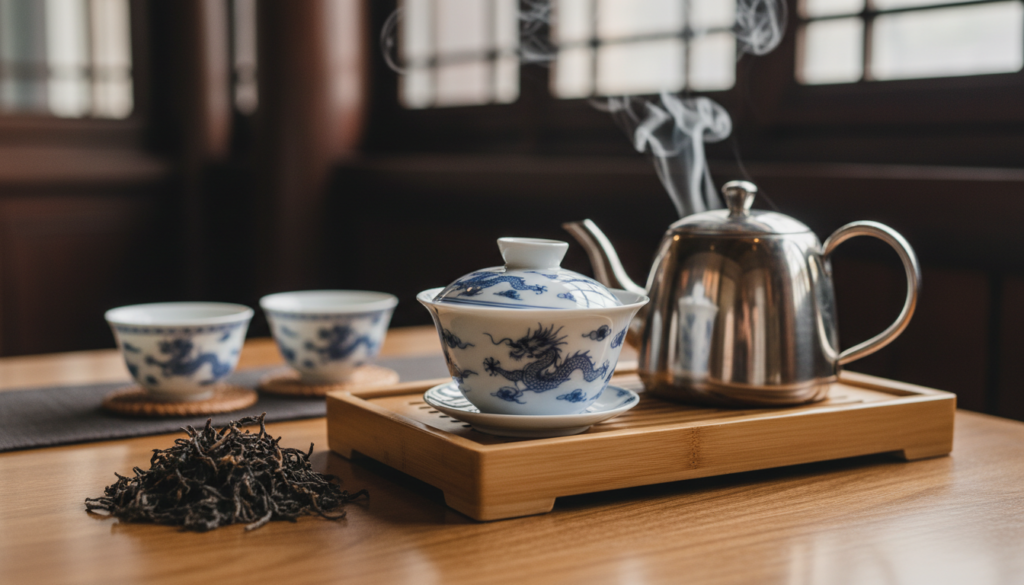
Oolongs: Where the Gaiwan Truly Shines
Oolong teas are perhaps the most celebrated when it comes to Gaiwan brewing. The partially fermented leaves offer a complex flavor profile that the Gaiwan can bring to life. The ability to control the temperature and steeping time allows for a nuanced extraction of the tea’s many layers.
- Tieguanyin: A classic choice, known for its floral and fruity notes.
- Wuyi Oolong: Offers a robust, mineral-rich flavor profile.
Pu-erh Teas: Bold Flavors, Multiple Steeps
Pu-erh teas, both Sheng and Shu, benefit greatly from Gaiwan brewing. The earthy, rich flavors are enhanced by the Gaiwan’s ability to handle multiple infusions, making it ideal for teas that improve with each steep.
“Pu-erh tea is like a good friend; it gets better with time.”
White Teas: Delicate Perfection
White teas, with their delicate and subtle flavors, are another excellent choice for Gaiwan brewing. The gentle infusion process preserves the tea’s natural sweetness and subtlety.
- Silver Needle: Known for its delicate, floral taste.
- White Peony: Offers a slightly more complex flavor profile.
Green Teas: Proceed with Mindful Care
Green teas can be brewed beautifully in a Gaiwan, but they require a bit more care due to their sensitivity to temperature and steeping time. Japanese green teas like Sencha and Chinese varieties such as Longjing are excellent choices.
Black Teas: My Controversial Take
While black teas are often associated with stronger brewing methods, they can also be brewed to great effect in a Gaiwan. The key is to adjust the steeping time and temperature to suit the tea’s robustness.
| Tea Type | Steeping Time | Temperature |
|---|---|---|
| Oolong | 20-30 seconds | 90-95°C |
| Pu-erh | 10-20 seconds | 95-100°C |
Common Mistakes I See Beginners Make (and How to Avoid Them)
As a seasoned tea enthusiast, I’ve observed that beginners often stumble upon a few common pitfalls when brewing tea with a Gaiwan. Mastering the art of Gaiwan brewing requires not just understanding the mechanics, but also avoiding the mistakes that can lead to a subpar tea experience.
The Burnt Fingers Syndrome
One of the most common issues beginners face is burning their fingers while pouring the tea. This can be avoided by holding the Gaiwan correctly and using the lid to control the flow of tea. Practice makes perfect, and soon you’ll be pouring like a pro.
Over-Steeping and the Bitterness Trap
Over-steeping is another common mistake that can lead to a bitter taste. The key is to understand the optimal steeping times for different types of tea. For instance, delicate green teas require shorter steeping times, while more robust Pu-erh teas can withstand longer infusions. Experimenting with different steeping times will help you find the perfect balance for your favorite teas.
Using the Wrong Water Temperature
The temperature of the water is crucial for bringing out the best flavors in your tea. Using water that’s too hot can scald the tea leaves, resulting in a bitter taste, while water that’s too cold may not extract the full flavor potential. Understanding the ideal water temperature for your specific tea type is essential for achieving the perfect cup.
Overfilling Your Gaiwan
Overfilling the Gaiwan can lead to tea leaves getting stuck in the lid or spilling over when pouring, making a mess and wasting precious tea. Leaving enough space for the tea leaves to unfurl and for the water to flow freely is key to a smooth brewing experience.
By being aware of these common mistakes and taking steps to avoid them, you can enhance your Gaiwan brewing experience and enjoy the perfect cup every time. Happy brewing!
The Real Gaiwan Benefits (Beyond Just Making Good Tea)
Beyond its functional role, the Gaiwan offers a multitude of benefits that enhance the tea-drinking experience. It’s not just about brewing tea; it’s about cultivating a deeper connection with the tea, the process, and oneself.
Connecting with Tea on a Deeper Level
Using a Gaiwan allows tea enthusiasts to engage with their tea on a more intimate level. The process of handling the Gaiwan, observing the tea leaves unfurl, and appreciating the aroma fosters a deeper appreciation for the art of tea-making. This connection enhances the overall experience, making each cup more meaningful.
The Mindfulness Factor
The Gaiwan brewing process encourages mindfulness, as it requires attention to detail and presence in the moment. From measuring the tea leaves to timing the infusions, every step is an opportunity to practice being present. This mindfulness can transform tea time into a meditative practice, providing a calm and peaceful respite from the hustle and bustle of daily life.
Practical Advantages for Daily Use
Beyond its ceremonial aspects, the Gaiwan is also a practical tool for daily tea enjoyment. Its design allows for multiple infusions, making it efficient for using loose-leaf teas. Additionally, Gaiwans are often easy to clean and maintain, adding to their practicality.
| Benefit | Description |
|---|---|
| Deeper Connection | Fosters a more intimate engagement with tea |
| Mindfulness | Encourages presence and attention to detail |
| Practicality | Efficient for multiple infusions and easy to maintain |
Building Your Gaiwan Tea Set: What You Actually Need
The art of Gaiwan tea brewing is best appreciated with a complete tea set that includes several crucial elements. While the Gaiwan itself is the centerpiece, other accessories play significant roles in enhancing your tea experience.
Essential Accessories for Gaiwan Brewing
To get the most out of your Gaiwan, you’ll need a few essential accessories. These not only make the brewing process smoother but also add to the overall aesthetic of the tea ceremony.
The Fairness Pitcher
A fairness pitcher, also known as a Gong Dao Bei, is used to distribute the tea evenly among the cups, ensuring each cup has the same flavor and strength. This accessory is crucial for achieving balance in your tea servings.
Tea Cups and Serving Ware
Tea cups are where you’ll be savoring your brewed tea. Look for cups that are designed to enhance the aroma and flavor of your tea. The material, size, and shape can all impact your tea-drinking experience.
Tea Trays and Tools
A tea tray helps keep your workspace organized and tidy, catching any spills or drips during the brewing process. Additional tools like tea scoops, tongs, and a tea needle can also be very useful.
Where to Buy Quality Gaiwans
Finding the right place to buy your Gaiwan and its accessories is important. Specialty tea shops, both online and offline, are great resources. Online marketplaces can also offer a wide range of options, but be sure to check reviews and product descriptions carefully.
My Budget-Friendly Recommendations
You don’t have to break the bank to start enjoying Gaiwan tea brewing. Look for starter sets that include the essentials, and consider purchasing items gradually as you become more familiar with the practice. Porcelain Gaiwans are a great starting point, offering a good balance between quality and affordability.
Building your Gaiwan tea set is a journey that allows you to tailor your tea-brewing experience to your preferences. By choosing the right accessories and understanding where to find quality products, you can enhance your enjoyment of this traditional Chinese tea ceremony.
Conclusion
As we conclude this exploration of the gaiwan, it’s clear that this traditional Chinese teacup offers more than just a method for brewing tea. It represents a gateway to a deeper understanding and appreciation of tea culture.
By incorporating the gaiwan into your daily routine, you’ll not only enhance your tea-brewing skills but also cultivate a sense of mindfulness and connection to the tea community. The gaiwan’s versatility and the art of Gong Fu Cha make it an ideal tool for exploring various tea varieties, from oolongs to pu-erh.
Whether you’re a seasoned tea enthusiast or just beginning your journey, the gaiwan invites you to slow down, savor the moment, and appreciate the nuances of tea. As you continue to explore the world of tea with your gaiwan, you’ll discover new flavors, techniques, and connections that enrich your life.